BPC-157 — 10 mg
Original price was: $29.99.$23.99Current price is: $23.99.
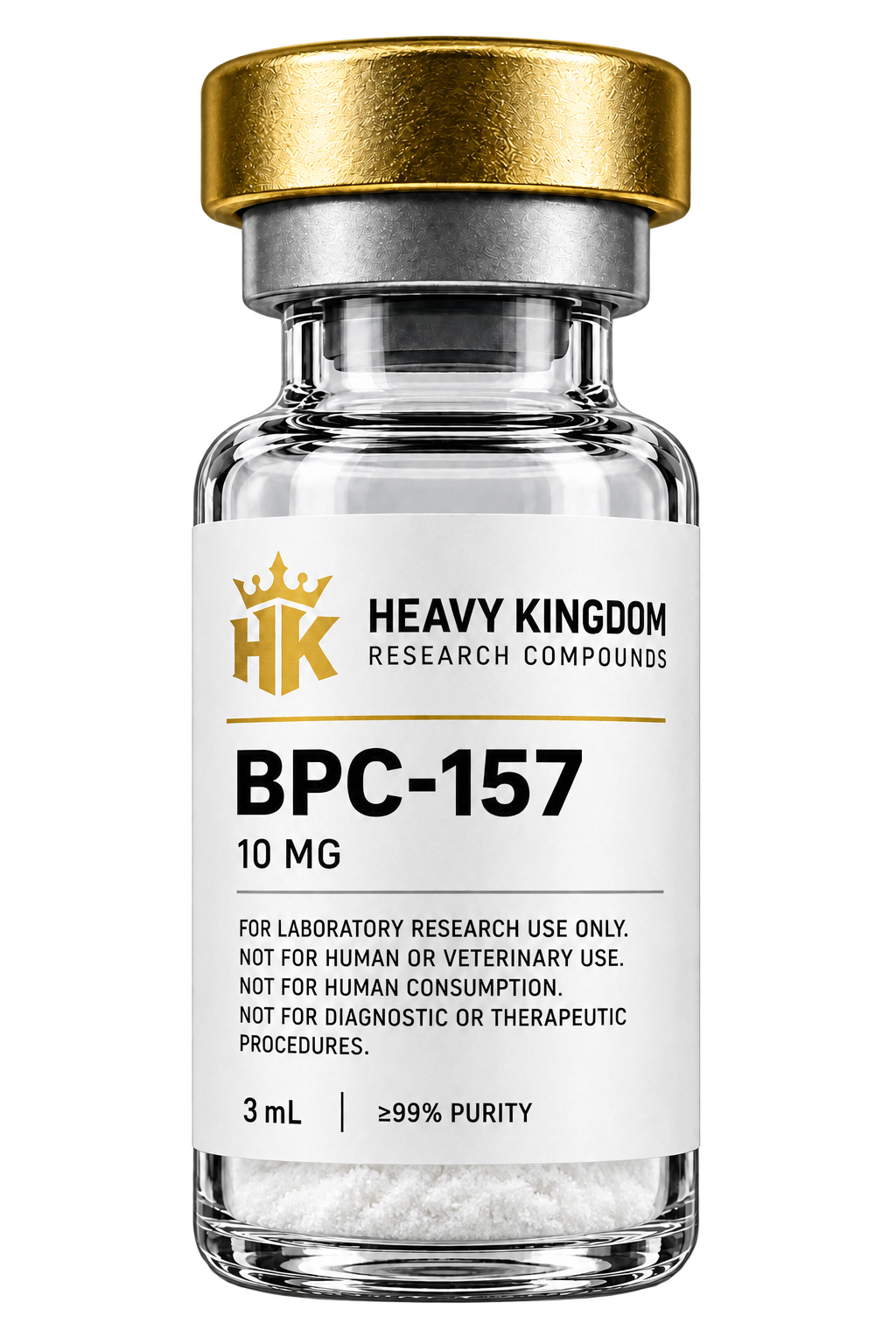
BPC-157 in a 10 mg vial. Part of the Heavy Kingdom research catalog, with lot documentation to review before laboratory use. Not for human or veterinary use.
Coming soon
Coming soon. This compound is listed while photography and lot documentation are prepared. It cannot be purchased yet.
BEFORE YOU ORDER
Review the documentation.Check the current report status and match documentation to your vial’s lot.
Open documentation hub →RESEARCH COMPOUND
What is BPC-157?
BPC-157 is a synthetic pentadecapeptide (15 amino acids) derived from a partial sequence of a protein found in gastric juice. In laboratory research it is used to study cytoprotective, angiogenic, and cellular-repair signaling.
This listing is for laboratory research only. It is not a medicine and this page does not provide dosing or administration guidance.
Mechanism of action
Published laboratory work examines BPC-157 across several signaling systems, including:
- Nitric oxide (NO) pathways
- FAK–paxillin signaling
- Growth-factor expression (including EGF, VEGF, and FGF in experimental models)
Heavy Kingdom does not claim clinical outcomes for this product.
Laboratory specifications
| Catalog name | BPC-157 |
|---|---|
| Type | Synthetic pentadecapeptide fragment |
| Sequence | Gly-Glu-Pro-Pro-Pro-Gly-Lys-Pro-Ala-Asp-Asp-Ala-Gly-Leu-Val |
| Molecular formula | C62H98N16O22 |
| Molecular weight | 1419.53 g/mol |
| Appearance | White lyophilized powder |
| Available amount | 10 mg vial |
| Intended use | Laboratory research only |
| Storage | Keep frozen, protected from light and moisture, according to your laboratory’s peptide-handling SOP |
Published literature
Papers below are background reading. They are not product claims and do not describe Heavy Kingdom lots.
- Sikiric et al., Current Pharmaceutical Design (2018). Gastric pentadecapeptide BPC 157 — organoprotection pathways. PMID 29412116.
- Seiwerth et al., Journal of Physiology and Pharmacology (2018). BPC 157 and blood vessels in experimental models.
For laboratory and research use only. Not for human or veterinary consumption. Match any analytical report to the lot printed on your vial before use.
Laboratory handling
| Form | Lyophilized powder in a sealed research vial |
|---|---|
| Lyophilized storage | Keep sealed, desiccated, and protected from light. Typical research storage is −4°F (−20°C) (or −112°F (−80°C) for longer holds). Unopened vials may be held at 36°F–46°F (2°C–8°C) for short periods. Follow your laboratory SOP. |
| After reconstitution | Typical research handling is refrigeration at 36°F–46°F (2°C–8°C), use within about 30 days, and avoiding repeated freeze–thaw cycles. Warm sealed vials to room temperature before opening. |
| Documentation | Match any analytical report to the lot printed on the vial. Product photos are not a substitute for a lot-specific report. |
| Intended use | Laboratory research only. Not for human or veterinary use, consumption, or diagnostic or therapeutic procedures. |
Related products
-
Research Compounds
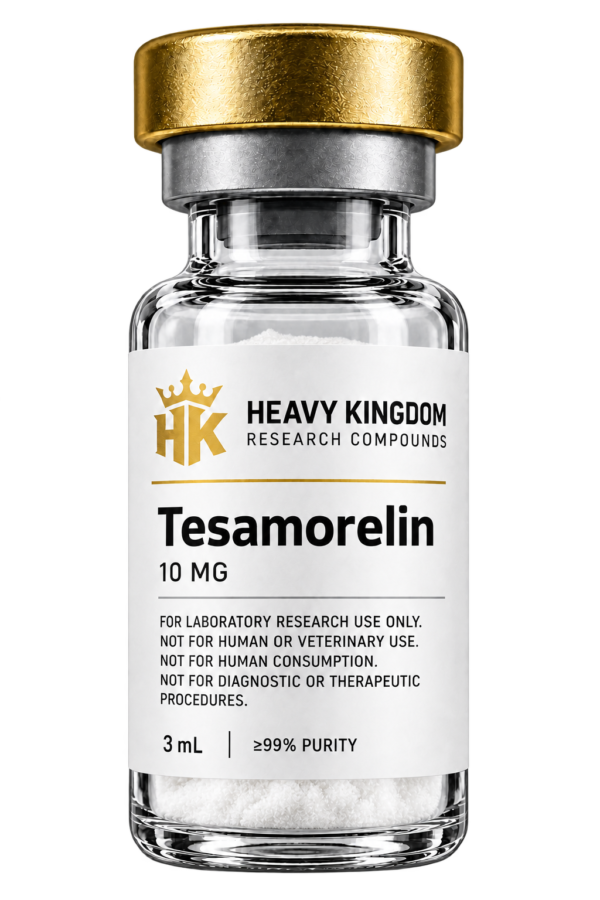
Tesamorelin — 10 mg
Original price was: $59.99.$42.99Current price is: $42.99.Read moreTesamorelin in a 10 mg vial for laboratory research. Clear product identification with corresponding lot documentation to review before use. Not for human or veterinary use.
-
Research Compounds
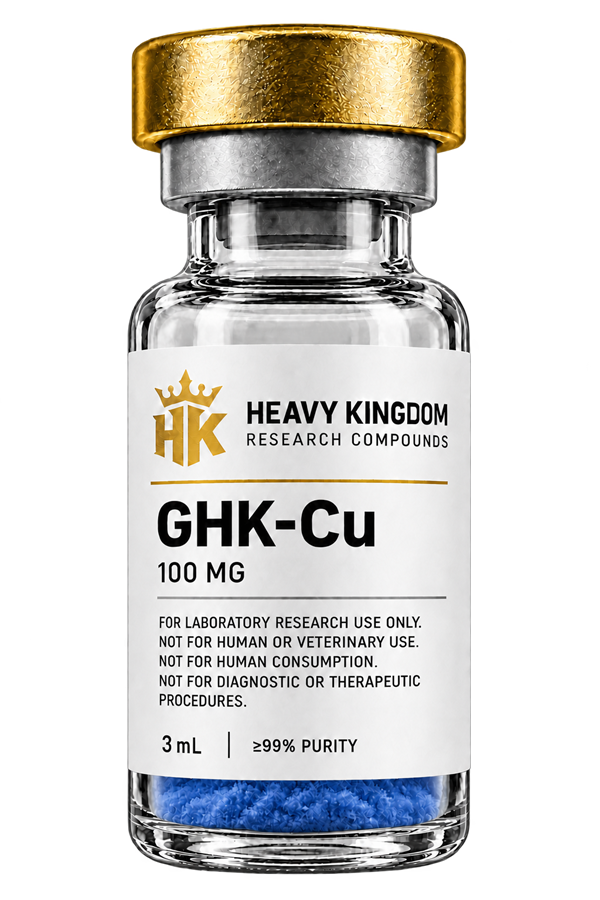
GHK-Cu — 100 mg
Original price was: $29.99.$27.99Current price is: $27.99.Read moreCopper tripeptide-1 (GHK-Cu) in a 100 mg lyophilized vial for laboratory research. Coming soon. Not for human or veterinary use.
-
Research Compounds
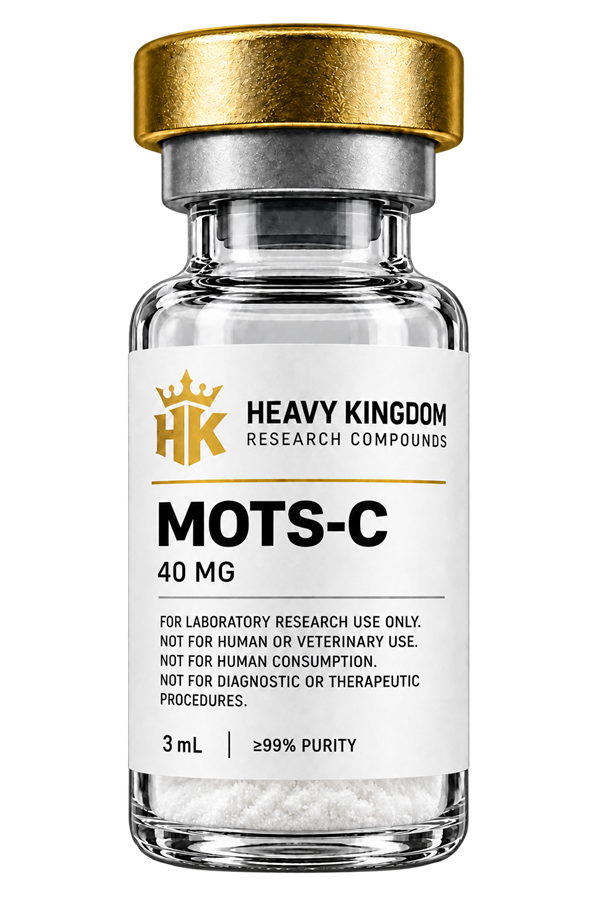
MOTS-C — 40 mg
Original price was: $39.99.$29.99Current price is: $29.99.Read moreMOTS-C mitochondrial-derived peptide in a 40 mg lyophilized vial for laboratory research of metabolic signaling. Coming soon. Not for human or veterinary use.